
Descended from Teachers: The Black Teacher Archive and the Beck Family Legacy
Stewardship has often been described as entrusting the care and management of something of great importance to someone of trust. In Black education, that trust was placed in the hands of teachers, principals, and community leaders who understood that the survival of their communities depended on the survival of their schools. Descended From Teachers draws on numerous primary sources to situate the educational lives, achievements, and contributions of two prominent Black South Carolina educators, Joseph Brown Beck and Joseph Elbert Beck, within the broader context of Black education in South Carolina.
Curated By Brandon Beck.
Adapted for online by Erica Buddington.
Header Image: South Carolina Department of Archives and History, Liberty Hill Colored School, 1949.

Palmetto Education Association, “PEA Journal. Columbia, S.C. : Palmetto Education Association. Volume 11. No. 5. May 1960. South Caroliniana Library, University of South Carolina. Black Teacher Archive.,” n.d., accessed July 22, 2024
Historically, the contributions of members of Colored Teacher Associations are often absent from the larger historical record. This exhibit highlights the roles these two men played in advancing Black education in their respective home communities. As stewards, they were entrusted with the responsibility of promoting Black education within their state and local areas of influence. The concept of progress is best exemplified by the Beck family's familial legacy and their contributions to education. J.B. Beck was a prominent Black teacher and principal in Georgetown, SC, for over 50 years. He was an active member of the various South Carolina colored teacher associations from 1908 to 1949, serving in various roles within the organizations. J.E. Beck, the son of J.B. Beck, was a renowned Black teacher and principal of Sterling High School in Greenville, SC. He was an outstanding proponent of Black education and an active member of the National Education Association (NEA) and the American Teachers Association (ATA). The accomplishments of these two individuals show that leadership and insight on shaping Black education were passed from father to son. In turn, their ability to uplift those around them and promote the ideals of equality, unity, and success was evident in their contributions to the communities they lived in.
South Carolina CTAs
Tracing the history of Black education makes it quite evident that the struggle for the advancement of Black people cannot be complete without referencing the organizing of local Colored Teachers Associations (CTA). These associations were not simply professional organizations; they were the infrastructure through which Black educators built, sustained, and defended an entire educational ecosystem under the conditions of legal segregation.
Beck Family Legacy
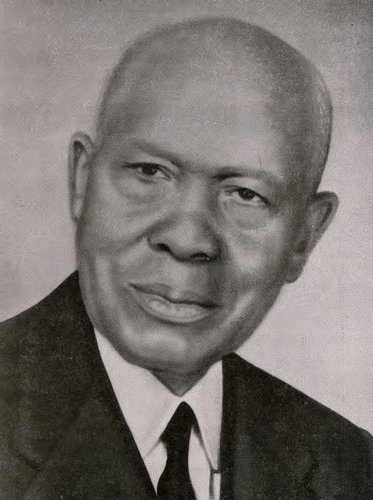
Georgetown County Digital Library, Joseph Brown Beck (1873-1960), 1940 , CAAHO/Dreamkeepers
Joseph Brown Beck and Joseph Elbert Beck participated in these Colored Teacher Associations to support and sustain the growth of Black education. J.B. Beck served on the committee responsible for establishing the system of Black secondary schools across South Carolina and presided over general sessions at the annual Palmetto State Teachers Association conventions.
J.E. Beck represented the state's Negro teachers as a delegate to the National Education Association's annual convention in Cleveland and led workshops to improve literacy instruction statewide. Through their involvement in various committees within these organizations, the Becks looked to elevate the status of Black education to an equitable standard. Their work during Jim Crow illustrated the challenges faced by many of South Carolina's Black educators as they navigated an educational system dominated by racial segregation and the unequal distribution of educational resources. Despite these challenges, Joseph Brown Beck offered a vision for the path forward when he remarked, "The greatest trouble between the races is a lack of understanding." For Beck, education was not only an academic endeavor but a tool for building the cross-racial understanding that justice required.
The Education of J.B. Beck
Joseph Brown Beck (J.B. Beck) was often described as a Christian gentleman who loved education and his students. Described by those who knew him as a selfless, fearless leader, he ran the classrooms under his control with stern discipline. Beck was born on February 3, 1873, in Abbeville, South Carolina. Like most formerly enslaved parents, J.B. Beck's parents understood that literacy and education were among the most powerful tools available to Black families in the post-Reconstruction South. Beck first attended Allen University in Columbia, South Carolina, before moving on to the Hampton Institute in Virginia, where he cultivated his commitment to teaching and service. Both institutions were among the most prominent training grounds for Black educational leaders nationwide. After completing his studies, Beck traveled approximately four hours southeast to Georgetown, South Carolina, a coastal community where he would spend the majority of his career. His arrival in Georgetown in 1900 marked the beginning of a decades-long investment in a community that would come to define his legacy.
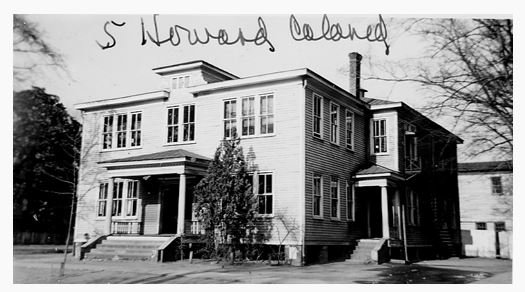
The Greenbook of South Carolina, Howard Colored School,n.d,Accessed 7/31/2024.
Joseph B. Beck's role in advancing Black education was evident in his appointments to leadership positions in the South Carolina State Teacher Association, the Palmetto State Teacher Association, and the National Education Association (NEA). To understand the significance of these appointments, it is important to recognize what Beck was working against. During this era, Black schools in South Carolina were chronically underfunded, operating in inadequate buildings with limited materials, and denied the accreditation that would allow their students access to higher education. Within that context, Beck's committee worked to establish the first secondary segregated Black school, Howard High School, in Georgetown, South Carolina, represented a structural victory for Black students who had previously had no pathway to secondary education in the region. He was an integral part of the committee that established the state's system of Black secondary schools. During the later part of his educational career, he became the superintendent of Black secondary schools, giving him statewide influence over the institutions he had spent his career building.
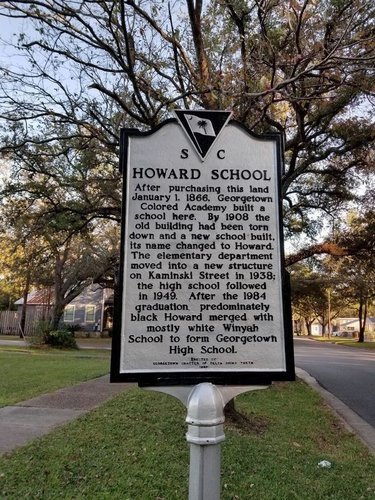
Historical Marker Database, Howard School Historical Marker,n.d, Accessed 7/31/2024
Although J.B. Beck's influence as an educational leader was seen at the state level, his most significant impact might have been on the Black community in Georgetown, SC. Upon his arrival in 1900, Beck found the Howard Colored School operating as the only Black school in the area, serving students at the primary level only and offering no pathway to secondary education. Over the following years, Beck oversaw tremendous growth in enrollment and academics, culminating in the creation of an entirely new school building in 1908. That expansion was not merely physical. It represented the school's transformation from a primary institution into one that could carry students through to secondary education, a change that opened doors to higher education for an entire generation of Georgetown's Black youth. At the 1908 dedication, Beck noted that it was the first time in eleven years that all of Howard's students were able to assemble under one roof. Through his simultaneous roles as deacon at Bethel A.M.E., a Black church in Georgetown, and as principal, Beck built an interconnected presence in the community. In the South, the Black church and the Black school frequently functioned in relation to one another, sharing space, resources, leadership, and a commitment to the survival and elevation of the community. Beck's dual role reflected that tradition.
The Education of J.E. Beck
Professor Beck, as those in Greenville's community called him, was a renowned educator and leader in South Carolina. Born in Georgetown, South Carolina, to prominent educators Joseph Brown Beck and Ella Dunmore Beck, Professor Beck grew up shaped by a household where service to Black education was not an aspiration but a way of life. While the records of his early schooling have not been fully preserved in either family or public archives, what is known is that Beck pursued his higher education with remarkable ambition. He continued his academic career at Morehouse College in Atlanta, Georgia, and later earned an M.S. in education from Atlanta University. He went on to complete his doctorate in education at New York University before his death in 1961. Beck began his teaching career at schools in Ridgeland, South Carolina, and Big Stone Gap, Virginia. He then followed in his father's footsteps, moving to Greenville to serve as principal of Union School in 1931, then of Grover Street School, where he served as its first principal, before taking over as principal of Sterling High School in 1940. He led Sterling for over 21 years. He held various leadership positions, including president of the Greenville County Teachers Association, and was an active member of the National Association of Secondary Principals, the National Education Association, the Palmetto Education Association, and Omega Psi Phi Fraternity. He served from 1959 to 1960 as co-chairman of "Greenville's Big Idea," a concept that addressed inequities within Greenville's Black communities.
As a steward of progress, J. E. Beck assumed several roles within South Carolina's Colored Teachers' Association. He was a member of the Palmetto State Teachers Association and the Palmetto Education Association. Within these organizations, he led discussions on improving community life and coordinated planning and budgeting for several association programs. He also ran, though unsuccessfully, for the presidency of the Palmetto State Teacher Association in 1950. One of J.E. Beck's most significant contributions to the SCCTA was a workshop he led that same year on increasing literacy rates among South Carolina's students. In that era, workshops within colored teacher associations served as one of the primary venues for professional development among Black educators, who were excluded from the training opportunities and institutions available to white teachers. Beck's reading workshop was designed to present a "unified approach to reading," bringing together teachers from across the state around a shared instructional framework at a moment when the literacy stakes for Black communities could not have been higher.