Home
Black Teacher Archive
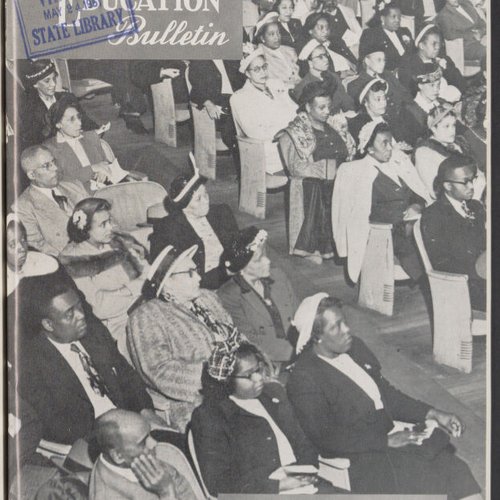
The Black Teacher Archive (BTA) is a digital humanities project centralizing publications created by professional organizations of African American educators, historically referred to as Colored Teachers Association (CTAs).
Bringing together materials from over 90 archival repositories across the United States, the collection makes public the intellectual, political, and cultural contributions of Black educators during the Jim Crow era.
Curated Feature
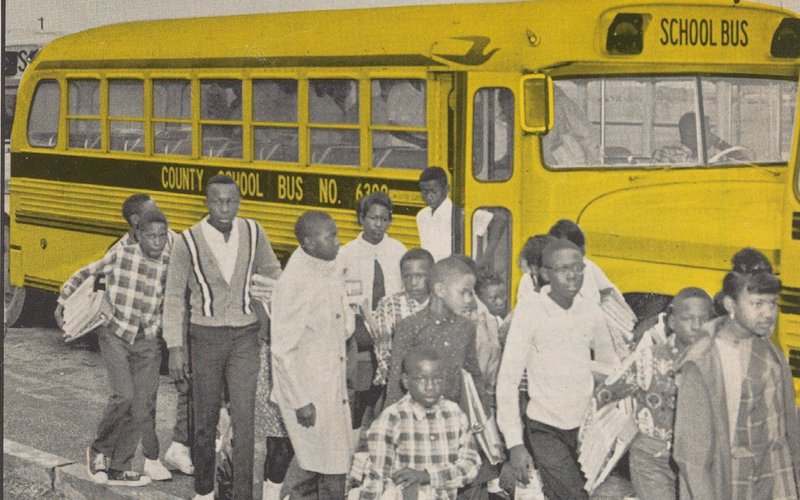
About Colored Teachers Associations
Colored Teachers Associations were vital professional organizations for African American educators. This resource provides an overview of the associations.
Curated Feature
Related Resources
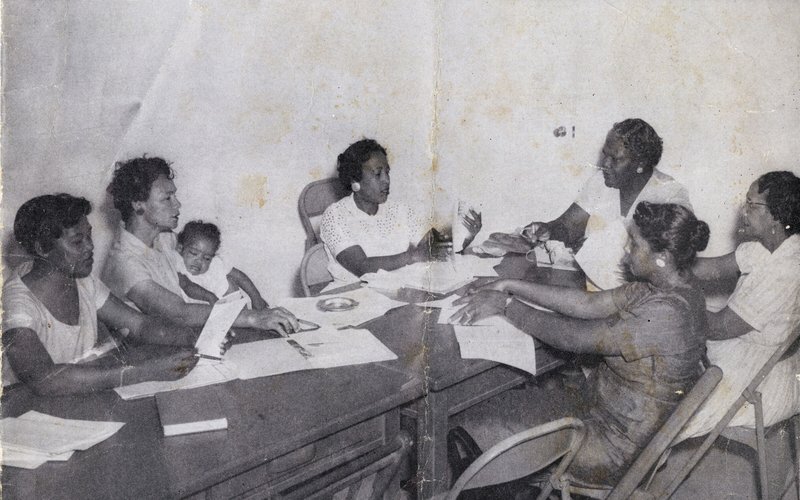
Bibliographic resource guides for primary and secondary sources on the history of Black education, specifically Colored Teacher Associations.
Faces of the Archive
Mary McLeod Bethune
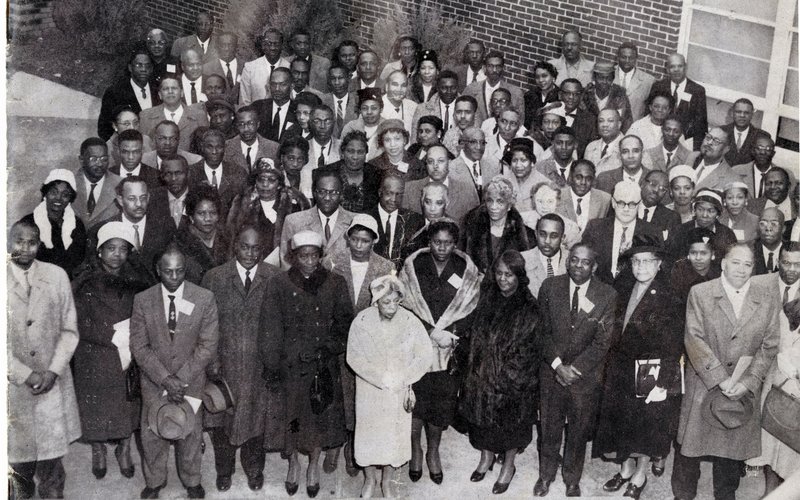
Mary McLeod Bethune arrived in Daytona, Florida, in 1904 with $1.50 and a determination to build a school for Black children. That dream became Bethune-Cookman College, but the archive reveals so much more. She served as President of the National Association of Teachers in Colored Schools and the Florida State Teachers Association, and was a leader in organizations that served Black communities across the US and the African Diaspora. But Bethune didn't build alone. The educators, librarians, and women's organizations with whom she partnered are also documented here. The BTA helps us appreciate Bethune’s legacy within the extensive network to which she belonged.
James Weldon Johnson
James Weldon Johnson is best known for “Lift Every Voice and Sing,” the song he co-wrote with his brother, John Rosamond Johnson; indeed, a cultural gift also traceable to their mother, who was a musician and educator, and to James Weldon Johnson, the first secretary general of the NAACP. Johnson also contributed greatly to early 20th-century Black education as a leader among teachers. He served as President of the Florida Teachers Association, and even when he stepped down, continued to speak at teachers' association events, moving through the same educator networks that produced the generation of educators who would teach the words of his song to the world.
Horace E. Tate
As a child, Horace E. Tate learned from his mother that education was not just personal growth; it was a weapon against oppression. He carried that lesson into his work as a teacher, principal, and eventually as the executive director of the Georgia Teachers and Education Association. Tate petitioned school boards, organized against structural inequality, and advocated for Black teachers and students across the state. He collaborated with civil rights leaders, often under the cover of night, and he single-handedly preserved the GTEA records. In more ways than one, Dr. Tate represents the spirit of the BTA, and the traces of his work are extensive within the collection.
Edna Colson
Edna Meade Colson (1888-1985) had to leave Virginia to get her PhD because the state's segregated universities would not admit her. She didn't build past this quietly; she chaired the committee that began implementation of graduate courses for Black students at Virginia State College, building in the same state that had refused her. At one point in Virginia's education history, it was estimated that half of all Black teachers employed in Virginia's public schools had once been her students. The archive places her in the company of Mary McLeod Bethune, John Hope, and Fannie C. Williams and a network of Black educators whose full story lives here.
Thurgood Marshall
Thurgood Marshall was the lead attorney for the NAACP as it pursued the Brown v. Board of Education decision— but the BTA reflects his fight for Black educators and students long before that landmark ruling. As NAACP special counsel, he argued salary equalization cases for Black teachers in Virginia and Maryland in the late 1930s and 1940s, appearing before teacher associations to report on the legal struggle waged on their behalf. The BTA helps us appreciate Marshall’s longstanding partnership with Black educators.
Charlotte Hawkins Brown
Charlotte Hawkins Brown was born in North Carolina and educated in Cambridge, Massachusetts. A chance encounter with Alice Freeman Palmer, the president of Wellesley College, who met a teenage Brown as Brown was reading in Latin, set her on a path back to the South. In 1902, she founded Palmer Memorial Institute in a converted blacksmith's shop in Sedalia, North Carolina, building it into one of the finest preparatory schools for Black students in the country. As president of the North Carolina Teachers Association, Brown addressed Black teacher networks from Texas to Tennessee and beyond. The archive holds her words and her reach.